Up vs Down: Structural Violence in American Healthcare
ALL OPINIONS EXPRESSED ARE SOLELY MY OWN.

Every year, 68,000 Americans die because they cannot afford medical care. In comparison, 22,830 Americans die per year from homicide.
People in the United States are living shorter lives. Life expectancy fell from 78.9 years in 2014 to 76.1 years in 2021. Compared to other wealthy countries, Americans live about 4 years less on average. Four fewer birthdays, four fewer years with family… When life expectancy falls, it is a failure of the society itself that is shortening lives.
The violence of the deaths of Americans who cannot afford healthcare is rooted in decisions made through PowerPoint presentations, emails, laws, and contracts. Watching a loved one die because care was denied is as violent as a direct homicide.
Structural Violence Is Invisible, Yet Deadly
Structural violence (Johan Galtung, 1969) exists when social, political and economic structures systemically prevent people from meeting basic needs.
Structural violence, unlike classical violence, is often invisible and functions like carbon monoxide, gradually causing sickness or death, without a specific perpetrator.
Private healthcare is a political choice. Deadly consequences are caused by forms not being approved, claims being denied or delayed. Even when care is accessible, it is made to be exhausting and conditional through paperwork.
Structural violence is so invisibilized and proceduralized that it suddenly becomes justified, and therefore, respectable. But a decision that predictably leads to death is never neutral. A system that kills without producing guilt is more dangerous than one that kills openly.
Diffused Responsibility
The responsibility is diffused (which allows the system to continue to exist), yet victims are nameable individuals. The violent consequences of their actions aren’t invisible: It’s someone’s mom, someone’s dad, an uncle, a friend, a colleague, while the institution only sees them as files and numbers. What is grief for a family, is greed and data for the system.
Significant harm can be done by ordinary people who follow rules (like applying a policy) without thinking morally. The moral responsibility diluted by procedure. Ordinary people conforming and obeying bureaucratic systems motivated by career advancement, seeing patients as numbers, failing to think critically and morally can lead to disasters. Seeing patients as numbers is completely dehumanizing, and stripping them of their humanity. This cuts off empathy, and reflection of moral consequences. Violence doesn’t require hate, but obedience and failure to think. No one feels responsible for the deaths, the pain, the anxiety, the sorrow… yet, they are very real.
Biological Control
Our current system, capitalism, produces illness. We are constantly under high pressure and stress. We live in a constant state of fight or flight. This leads to high cortisol, and chronic high cortisol leads to inflammation of the body, which causes the body to wear out: this is immune suppression. The current system is controlling the biological life of the population. Our society leads us to sickness.
Healthcare is a biopolitical tool: while some receive the best healthcare available, some can’t get none. American society is structured to make people pay to survive, where only those who can afford it will survive. Who gets to live and who gets to die is a political decision.
Wealth Inequality
James Gilligan (1996) defines structural violence as the increased rates of death and disability suffered by those who occupy the bottom rungs of society, as contrasted with the relatively lower death rates experienced by those who are above them.
Example: One in five deaths in Belgium is linked to poverty, according to a study by Sciensano. The poorest neighborhoods have higher mortality rates and different causes of death than those observed in the wealthiest areas. If the entire population enjoyed the highest level of prosperity, Belgium would record approximately 21,000 fewer deaths each year.
Structural violence affects the availability of healthcare, determining who falls ill and who receives care based on their wealth. A working-class person in the U.S. lives about 7 years less than a wealthy person.
“The Institute of Medicine, using older studies, estimated that one American dies every 30 minutes from lack of health insurance,” said David Himmelstein, Harvard Medical School and primary care physician at the Cambridge Health Alliance, “Even this grim figure is an underestimate. Now one dies every 12 minutes.”
Dental Care Is A Social Indicator
While the elite are getting dental veneers or professional whitening for purely aesthetic reasons, regular people can’t even get their teeth properly fixed because it can cost thousands of dollars.
Chronic oral pain affects sleep, eating, and speech. But to go further, poor oral health is directly linked to systemic health issues. Bacteria from gum disease and decay can enter the bloodstream, causing inflammation and infections throughout the body, leading to heart diseases, strokes, respiratory issues, or diabetes. Chronic dental pain also leads to mental decline in concentration, and mood. People affected by the lack of oral care withdraw socially due to shame. We know that withdrawing socially is linked to health issues and worsen inflammation. This is a self reinforcing circle. Oral care could prevent other physical and cognitive illnesses.
We have unequal access to consistent, high-quality dental care. Our teeth are a public indicator of social class; they are impossible to hide during social interaction. Someone’s denture can affect their social life and is often a bullying target. Mr. Holland, former president of the French Republic, mocked the French working class by calling them “people without teeth.”
Oral care is not optional and should be covered too. The whole body matters.
Economic Stress
Healthcare is not supposed to be a luxury, yet medical bills are the main reason for bankruptcy in the U.S. About 66.5% of people who file for bankruptcy say health costs caused it.That is about 550,000 people every year.
Economic stress affects over 70% of Americans, with 22% reporting extreme anxiety, often stemming from paycheck-to-paycheck living, debt, and inflation.
Economic insecurity becomes a biological risk factor. Not being able to afford healthcare makes people sick.
Americans without insurance are sicker and are 25% to 40% more likely to die than Americans who have insurance. Access to care, early diagnosis and treatment are conditional through wealth.
Society is biologically and economically controlling its population by making it sick, selling treatment, which keeps the population in economic debt, which leads to more sickness. It becomes a self-reinforcing cycle where sickness and poverty produce each other.
Cancer is devastating. 42% of cancer patients use up all their life savings within two years of diagnosis.
In 2022, 1 out of 4 cancer patients either:
went bankrupt,
lost their home through foreclosure or eviction.
Losing life savings is erasing a future that existed before the diagnosis. Healing is compromised in these conditions.
When you’re sick, anxious, and surviving, you can’t think. Precarity consumes cognitive and emotional resources: you cannot focus on anything else than your survival. Violence has been so common that it has become normalized. Illness, in our current society, is not prevented, but prolonged, and monetized. Treatment is repeatable, and billable. Late-stage care is more profitable than early prevention. The system only reacts once the damage is done.
United Health Care And United Health Group
UnitedHealthcare (UHC) is the leading private health insurance company in the United States. 29 million Americans depend on UHC to get their medical care covered, including life-saving care.
In 2024, UHC denied 29% of claims.
This means the company often:
does not reimburse care,
delays coverage, or
refuses treatment.
Paperwork is often prolonged, procedural, and strategically exhausting.
Thousands of people who had major surgery or suffered a stroke were denied post-operative care. Recovery windows are time-sensitive and delays can permanently alter outcomes. Without this care, their chances of survival and recovery were much lower.
Post-op complications lead to needing more coverage. This is a self reinforcing cycle.
Denials of post-operative care rose sharply under CEO Brian Thompson presidency.
10.9% in 2020
22.7% in 2022
In November 2024, the investigative outlet ProPublica revealed that UHC used artificial intelligence (AI) to deny claims for elderly patients enrolled in Medicare Advantage.
A lawsuit claimed that:
the AI system had a 90% error rate,
yet UHC continued to use it,
because only 0.2% of patients appeal denied claims.
Lack of appeals isn’t neutral but reflects structural exhaustion of fighting for care when being sick.
UHC also reduced coverage for psychiatric care. This decision put thousands of patients’ mental health and physical health at risk.
The Guardian revealed that UnitedHealth Group (UHG) used “Do Not Hospitalize” and “Do Not Resuscitate” policies. UHC pressured nursing home staff to convince residents insured by UHC to sign “no resuscitation” forms to reduce how much care the insurance had to pay for. Consent obtained under structural pressure is not autonomy. UnitedHealth also secretly paid nursing homes to avoid sending residents to hospitals. This reduced medical costs and led to preventable deaths.
Political Decisions
At the same time, politicians made the healthcare crisis worse.
The One Big Beautiful Bill Act cuts over $1 trillion in federal health funding. This is the largest rollback of public healthcare support in U.S. history.
According to the Congressional Budget Office (CBO):
10.9 million Americans would lose health insurance.
A CBO analysis released August 11, 2025 showed:
The richest 10% will see incomes rise by 2.7% by 2034, mostly from tax cuts.
The poorest 10% will see incomes fall by 3.1%, mainly due to cuts to Medicaid and food assistance.
Health funding is reduced while wealth is concentrated. Gains for the wealthy are paid for in years of life, health, and stability of the poorest Americans. Analysts can predict outcomes (CBO reports) yet policymakers act anyway.
Real People behind The Numbers
Three nursing home residents died because employees of the American healthcare giant UnitedHealth Group helped delay or deny them critical hospital care, two pending lawsuits and a complaint to state authorities have alleged.
“UHG directed the nurse to give Deal medicine.”
Cindy Deal (58): nursing home failed to hospitalize her for hours after she started foaming at the mouth and appeared to be having a seizure. UHG directed the nurse to give Deal medicine, instead of ordering her to transfer Deal to the hospital. Deal continued to gasp and struggled to breathe until 1.30am. Five minutes later, EMS responders found Deal lying in bed unconscious with pale skin, large open pupils and discolored lips, the affidavit states. Cindy Deal was pronounced dead shortly after she arrived at the hospital at 2.07am.
“Transfer was not yet necessary.”
Mary Grant (70): nursing home failed to send her to the hospital saying the transfer was not yet necessary, though she had suffered a traumatic head injury, nausea, low oxygen, and began vomiting. Mary Grant died.
“No”
Anonymous (63): nursing home refused to hospitalize the man, despite his kidney failure. The Anonymous man died.
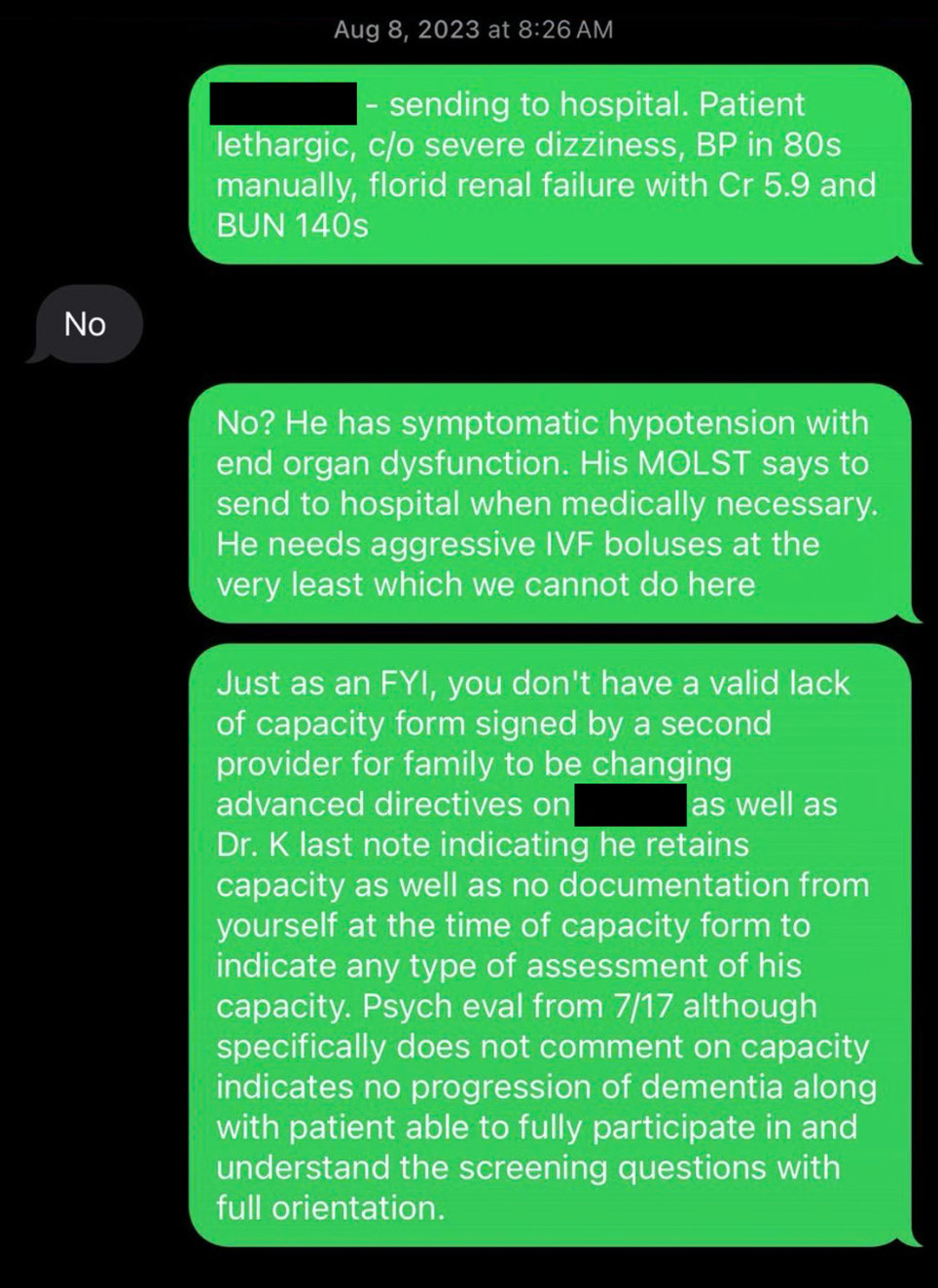
UnitedHealth insures more than 55,000 long-term nursing home residents. This could be your grandma. This could be your grandpa.
Change Is Possible
Just because it is legal doesn’t make it legitimate. Legality protects a system of greed built on people suffering and dying.
Evidence from other nations proves that these harms caused by structural violence can be prevented entirely by universal healthcare.
Example: Brazil has fully free and universal healthcare covering over 200 million residents. This also includes high-quality dental care at 50–70% lower costs than North America or Europe.
Structural violence comes from, and can be corrected by, human decisions.
Bibliography:
Galtung, Johan “Violence, Peace, and Peace Research”. Journal of Peace Research, 1969
James Gilligan, Violence: Reflections on a National Epidemic, January 1, 1996
Janice Hopkins Tanne, More than 26 000 Americans die each year because of lack of health insurance, April 19, 2008
Public Citizen, Nobody should die because they can’t afford health care, September 17, 2009
Annie Waldman, “How UnitedHealth’s Playbook for Limiting Mental Health Coverage Puts Countless Americans’ Treatment at Risk,” ProPublica, November 19, 2024.
Daniella Genovese, “UnitedHealthcare accused of relying on AI algorithms to deny Medicare Advantage claims,” Fox Business, December 6, 2024.
Bernie Sanders, HealthCare is a human right, May 6, 2025
Joseph, UnitedHealth secretly paid nursing homes to reduce hospital transfers, The Guardian, May 21, 2025.
Joseph, UnitedHealth reduced hospitalizations for nursing home seniors. Now it faces wrongful death claims. The Guardian, December 17, 2025
I hope the courts allow the defense to highlight the systemic issues with your healthcare. Looking down from north of the border, not only am I aghast at what is happening in general to my neighbour, the thought of healthcare not being a basic right is unfathomable to me. Given my medical history, if I didn't have universal healthcare, I wouldn't be alive.
wow its horrifying seeing it all laid out like this. i hope they fry those pigs at luigi’s trial. it may be our only chance at fixing all this for the next generation. they can’t live like this. thank you for putting this together